Multi-target Magnetic Control Sputtering System
Multi-Target Magnetron Sputtering
Operating
Model: Explorer-14
Function: Used for the sputtering deposition of various metal thin films;Reactive sputtering deposition of multiple oxide and nitride thin films; Equipped with the function of in-situ substrate cleaning.
Engineer: Mr. Fu / +86-21- 34206126-6010 / xuecheng.f@1
Location: Thin Film Zone IA, West Area
Equipment ID: WF1DMSP01
  • Basic Equipment Information
  • Operating Principle
  • Typical Application Case
Main Application

● Sputtering deposition of various metal, oxide and nitride thin films;

● Capable of fabricating functional thin film materials via reactive sputtering;

● Enables in-situ substrate cleaning and multi-target co-sputtering deposition of composite thin films.


Process/Testing Capability

Capable of sputtering a variety of metal, semiconductor and ceramic thin films with controllable thickness, including Cr, Cu, Ag, Al, Ti, Mo, ITO, AZO, TiNx, etc.

The maximum deposition thickness is generally no more than 3 μm. The resistivity of deposited metal thin films can be adjusted on demand.


Technical Specifications

  • Supports thin film deposition on substrates smaller than 6 inches.
  • The deposited film thickness typically ranges from 2 nm to 2 μm.
  • Refractive index of silica: approximately 1.47.
  • Refractive index of TiO₂: approximately 2.40.
  • For 6-inch substrates: film thickness error ±3%, uniformity ±3%, repeatability fluctuation ±2%.
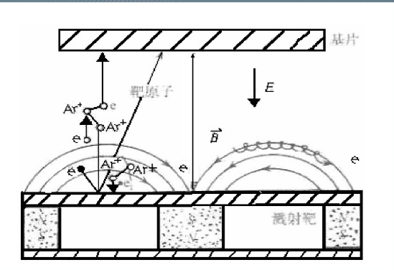
Electric fields or radio frequency (RF) power ionize the working gas (argon). A magnetic field constrains electron motion to raise the ionization efficiency, thereby increasing plasma density and sputtering rate.

High-energy particles with energy exceeding the sputtering threshold bombard the target surface, ejecting target atoms. These atoms deposit onto the substrate to realize sputtering coating.
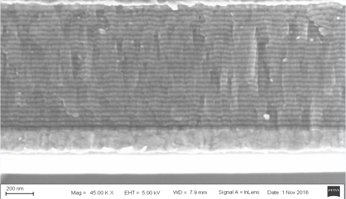
 

Multi-target alternating sputtering is employed to deposit 15 nm-periodic thin films for the fabrication of thermoelectric thin-film devices. The film thickness is precisely controllable, with a thickness uniformity within ±2%.


  • Samples requiring substrate heating above 100 °C will not be accepted.
  • Samples with excessive moisture (i.e., samples with thick photoresist over 3 μm) will not be accepted.
  • Samples requiring sputtering of magnetic materials (Fe, Ni) will not be accepted.
  • Samples larger than 6 inches in size will not be accepted.
  • Coating services on tiny particle samples (sub-millimeter scale) will not be accepted.

Samples requiring substrate heating above 100 °C will not be accepted.

  • Samples with excessive moisture (i.e., samples with thick photoresist over 3 μm) will not be accepted.
  • Samples requiring sputtering of magnetic materials (Fe, Ni) will not be accepted.
  • Samples larger than 6 inches in size will not be accepted.
  • Coating services on tiny particle samples (sub-millimeter scale) will not be accepted.
Ensure the power supply is fully turned off before target replacement.
The list below shows FAQs (click a question to view the answer). If your question is not listed, you can leave a message using the link.
FAQs
  • 01
    溅射陶瓷靶材为何一定要绑定铜背板?

    溅射时陶瓷靶材会碎裂,可能会溅射到靶枪上。绑定铜背板可以延长靶材的使用寿命

  • 02
    遇到靶中毒怎么办?

    反应溅射遇到靶中毒是常见的事情,设定功率时要保守一些,保证溅射时功率始终如一即可

  • 03
    反应溅射靶中毒是什么情况?

    金属被氧化或氮化反应后,电阻增加,靶枪功率会下降,阴极电压升高

  • 04
    设备为何拒绝磁性材料?

    磁性靶材可以削弱磁场,不容易辉光,还会削弱靶枪磁铁磁性。

Message Inquiry
If your question is not listed above, please email us at aemd@sjtu.edu.cn or click the button below to submit an inquiry.
Note: "@1" represents "@sjtu.edu.cn"
×