| Model: | Explorer-14 |
|---|---|
| Function: | 1.Evaporative deposition of various conventional metal thin films; 2.Evaporative deposition of magnetic thin films including nickel; 3.Oblique evaporation at ±45° is achievable. |
| Engineer: | Fu / +86-21- 34206126-6010 / xuecheng.f@1 |
| Location: | West Area – Thin Film IA |
| Equipment ID: | WF1DEGN01 |

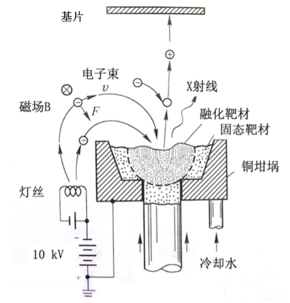
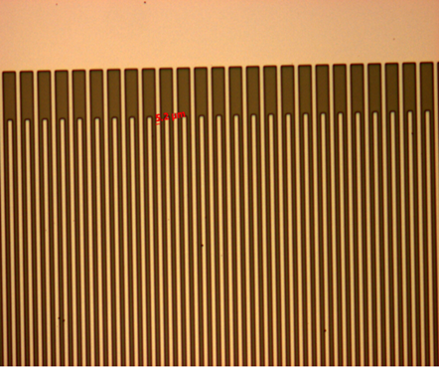
Mainly used for evaporating metal thin films such as gold, silver, aluminum, copper, chromium, titanium and nickel. It is applicable to electrode fabrication via the lift-off process and can meet the demand for thin film deposition by oblique evaporation within a 45° angle.
Process/Testing Capability
The equipment is equipped with an in-situ function for monitoring deposition thickness, supporting film deposition in the range of 1 nm to 5 μm. It can deposit a variety of metal thin films such as gold, silver, aluminum, copper, chromium, titanium and nickel. The worktable temperature is adjustable between 25 ℃ and 200 ℃.
Technical Specifications
The uniformity of 6-inch thin films is within ±3%, and the repeatability fluctuation error of fabricated film thickness is within ±2%. The deposition rates for evaporated gold, silver, copper, aluminum, titanium, chromium and nickel are all higher than 2 Å/s.
2.Coating is prohibited on sub-millimeter micro-particle samples.
3.Deposition of high-melting-point and highly contaminative metals including molybdenum and tungsten is not allowed.
4.Evaporated oxide films are unsupported.
5.Thick films of magnetic materials (Fe, Ni) exceeding 200 nm are not acceptable.
2.Cut off all power before opening the chamber.

Address: 800 Dongchuan Road, Minhang District, Shanghai 200240, China
Tel: +86 21 3420 7734
Email: aemd@sjtu.edu.cn