| Model: | PROTO |
|---|---|
| Function: | 1. Stage travel range: X-axis 300 mm, Y-axis 300 mm, Z-axis 60 mm; 2. Maximum substrate size: 250 mm × 250 mm; 3. Self-priming ink supply for the printhead; 4. Minimum achievable linewidth: ≤ 30 μm; 5. Supported ink viscosity: ≤ 450 cps; 6. Capable of printing continuous (non-discrete) microstructures, including lines and films formed in a single continuous process; 7. Droplet deposition without impact on the substrate, eliminating satellite droplets; 8. Editable pattern geometries: dot arrays, continuous lines, polylines, arcs, and continuous thin films; 9. Equipped with a real-time CCD video monitoring system. |
| Engineer: | Zhang / +86-21-34206126-6029 / captianzhangdi@1 |
| Location: | West Area – Packaging I |
| Equipment ID: | WPK1MNDS1 |

Microelectronics and Flexible Electronics: Printing of conductive patterns, electrodes, and antennas for the development of sensors and flexible electronic devices
Biomedical: Fabrication of biochips, microarrays, and cell scaffolds, as well as structures for tissue engineering and microfluidic analysis
Materials Research: Printing of nanostructures and functional thin films for exploring material properties and applications
Optics and Sensing: Fabrication of microlenses, gratings, waveguides, and chemical or biological sensors
Rapid Prototyping: Accelerates the development of new products or devices and can partially replace conventional photolithography processes
Based on microfluidic inkjet technology and a precision motion control system, pattern printing is achieved through accurate positioning and controlled liquid dispensing.
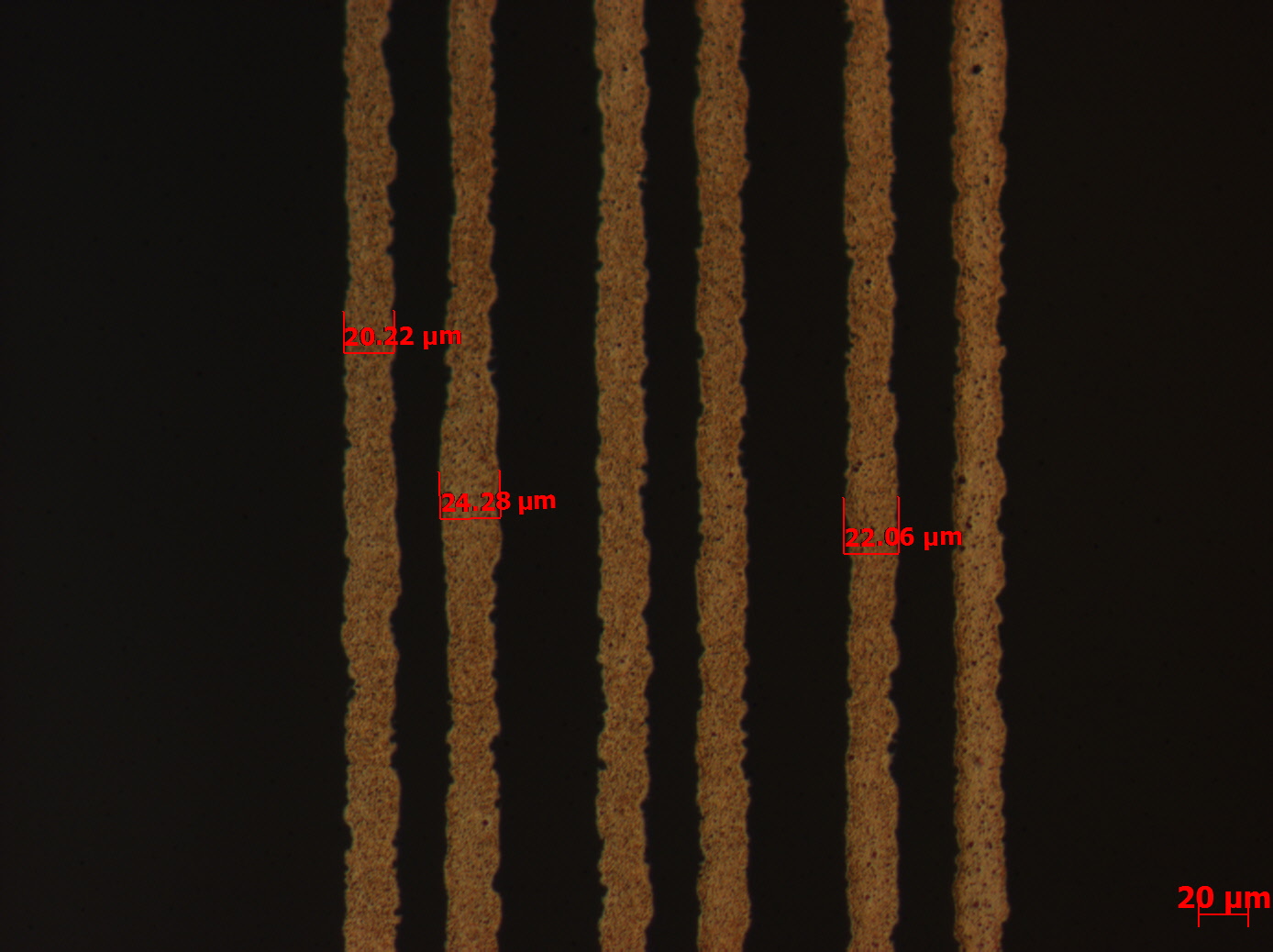
Glass substrate, 1 µm needle
1. Samples must be confirmed with the process engineer in advance.
2. Both the front and back sides of the sample must be kept flat and clean.
3. Users may bring their own ink and needle.
1. Samples must be confirmed with the process engineer in advance.
2. Both the front and back sides of the sample must be kept flat and clean.
The substrate requires both wet cleaning and plasma cleaning.

Address: 800 Dongchuan Road, Minhang District, Shanghai 200240, China
Tel: +86 21 3420 7734
Email: aemd@sjtu.edu.cn