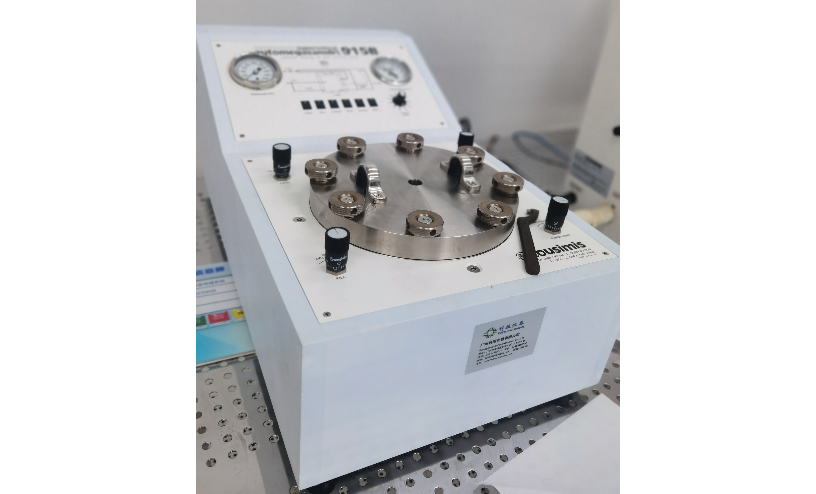
automatic critical point dryer
Operating
Model: Automegasamdri-915B
Function: Non-destructive drying of samples with complex and fine structures
Engineer: Mr. Tian / +86-21- 34206126-6031 / miaotian@1
Location: Compound Semiconductor Area, East Zone
Equipment ID: WW1TCPD01
  • Basic Equipment Information
  • Operating Principle
  • Typical Application Case
Primary Application
  • Dehydration of biological materials prior to electron microscope observation
  • Drying of MEMS structures with high aspect ratio
  • Drying of porous materials (e.g., sol-gel materials)
  • Drying of other samples with fine structures


Process / Testing Capabilities

  • Wafer size: 6-inch and smaller (including irregular samples)
  • Materials: SOI, Si, glass, copper sheets and other semiconductor materials (Consult the relevant process engineer for details)


Technical Specifications

  • Temperature: -30 °C to 60 °C;
  • The system rapidly cools from room temperature to 0 °C during the drying process;
  • Pressure: 0-2000 psiPower: 2500 W - 3000 W.
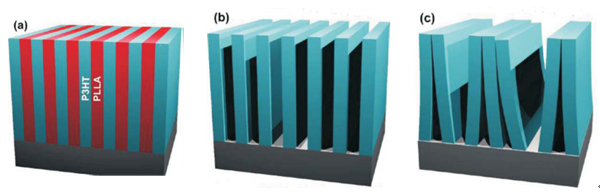
In the supercritical state, there is no longer an interface between gas and liquid; instead, they form a homogeneous fluid with properties intermediate to gas and liquid. This fluid is gradually expelled from the gaps of the sample. Since there is no gas-liquid interface, capillary force is absent, thus avoiding shrinkage of sample gaps and structural damage. The fluid is completely removed from the sample in this way, ultimately yielding a perfectly shape-preserved sample structure.
Supercritical CO₂ drying was adopted to remove the solvent shelf, with the polymer film remaining in its original vertical orientation, which improved its optoelectronic performance.

Sample size: < 6 inchesPlease replace and immerse the samples in IPA (isopropanol) in advance for at least 1 hour (preferably longer).
Please make a reservation in advance. Confirm the sufficient supply of liquid carbon dioxide before starting the process.
The list below shows FAQs (click a question to view the answer). If your question is not listed, you can leave a message using the link.
FAQs
  • 01
    有什么可替代设备?

    VHF

Message Inquiry
If your question is not listed above, please email us at aemd@sjtu.edu.cn or click the button below to submit an inquiry.
Note: "@1" represents "@sjtu.edu.cn"
×